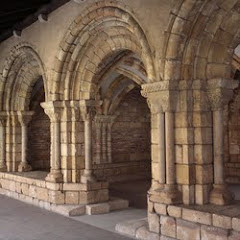
My absolute favorite museum in New York is in upper Manhattan in the middle of Fort Tyron Park, so removed from traffic and skyscrapers you will wonder if you have not been transported to another part of the world, say the south of France. That is exactly what John D. Rockefeller wanted you to think when he purchased the land and a collection of Medieval Art and Architecture which is now the Cloisters. The Cloisters, which resembles a medieval monastery, is a relatively modern building that includes in its structure parts of five actual medieval monasteries. The collection came about in the early twentieth century when an American Sculptor, George Grey Barnard, traveled to Europe and began buying the ruins of monasteries and other pieces of Medieval art. He then shipped them to the United States. Later, Rockefeller bought the collection, and built the modern day replication of a monastery in which to house them. He donated the building and the collection to the Metropolitan Museum of Art and the surrounding land, the sight of Fort Tyron, an American Revolutionary War Fort, to the city. He also bought the land across the Hudson River on the New Jersey side, which to this day remains undeveloped, so that patrons would know what the Medieval Monk or traveler saw when looking out the monastery window to the hills of France. The building contains the ruins of five monasteries, two chapels, a chapter house, and several cloisters (the covered walkways having an open colonnade surrounding a garden or courtyard) as well as part of the MET's collection of Medieval art. The most complete relic is the chapter house, a room in which the monks met daily. The gardens include plants which were grown in the monasteries for medicinal and culinary purposes. Spectacular tapestries which make me dizzy when I consider the hands that labored in their creation are probably the most recognized art featured. (The Unicorn in Captivity is featured in the latest Harry Potter Movie as decor on the wall of Hogwartz(SIC) of the school.) There are five Unicorn tapestries, which tell the story of a hunt, and they have an interesting history. The Cloister's architect and first curator were showing the completed building to Rockefeller. When they came to the room where the tapestries were to be featured, Rockefeller asked, what art would go in this room. They reportedly told him the gallery had been built for the tapestries which were then currently in Mr Rockefeller's personal collection. What could he do but then donate them to the museum? Also featured are sarcophagus of long dead knights and ladies. One of these was found by Barnard in use as a bridge, which gives you some idea of the condition of the ruins at the time he built the collection. There are stained glass windows , statues, wood carvings, ancient altars, pulpits and paintings. There is even, as in an actual monastery, a treasury, filled with gold artifacts. But the best feature of the Cloisters is the serene environment it provides, for quiet reflection and prayer. It is a place to come when the mind and the spirit need rest and reflection. This building was never used as a church so it is not sacred ground. Even so, it is one of those unique places where one can feel the presence of the generations of faithful, and the prayers which are steeped in the ancient stone.
If your visit is timed around lunch or dinner there is a great restaurant, The New Leaf, reasonably priced, close, and on the way from the subway station to the Cloisters. If you are there on Sunday, be sure to take advantage of the Brunch.
Admittance is $20 but as with the MET, this is the recommended donation price. If you only go once, you should by all means pay this price. If however, you cannot afford the full price, you may make a donation of your choice. The price of admittance to the Cloisters is good for admittance to the MET on the same day. To get to the Cloisters take the A train to 190th street. Then, you can either walk or take the bus the short distance to the museum. Plan to walk through Fort Tyron Park and enjoy the view across the river which includes the George Washington Bridge.


Subscribe to:
Post Comments (Atom)











 Posts
Posts












No comments:
Post a Comment